



· Yogesh Khedar· Platform· 4 min read
Water Is Not Slow Air
Teams arriving from aerial robotics tend to assume a surface vessel is a simpler drone. The dynamics, the access and the environment all say otherwise.
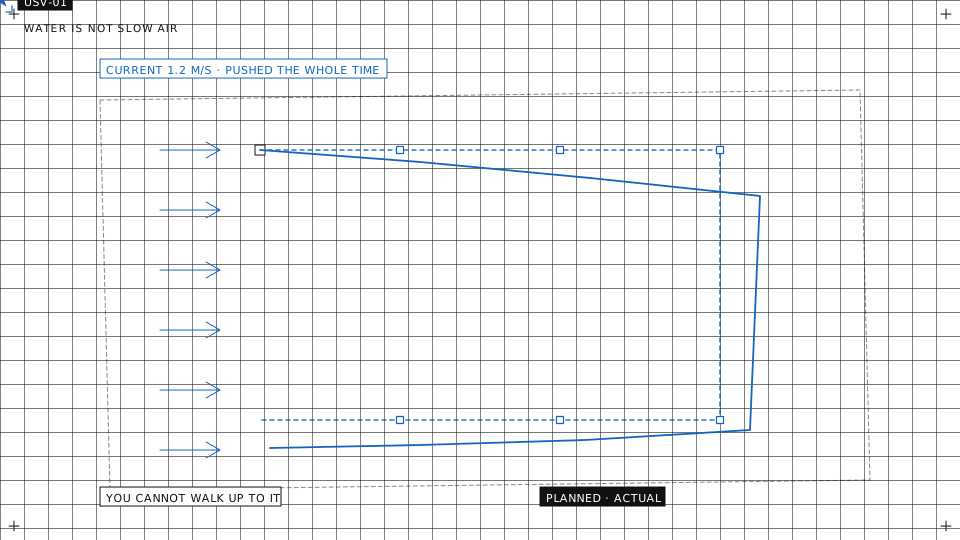
Teams arriving from aerial robotics tend to assume a surface vessel is a simpler drone. The dynamics, the access and the environment all say otherwise. We learned this building and running uncrewed surface vessels alongside the aircraft, in simulation first and then on the water.
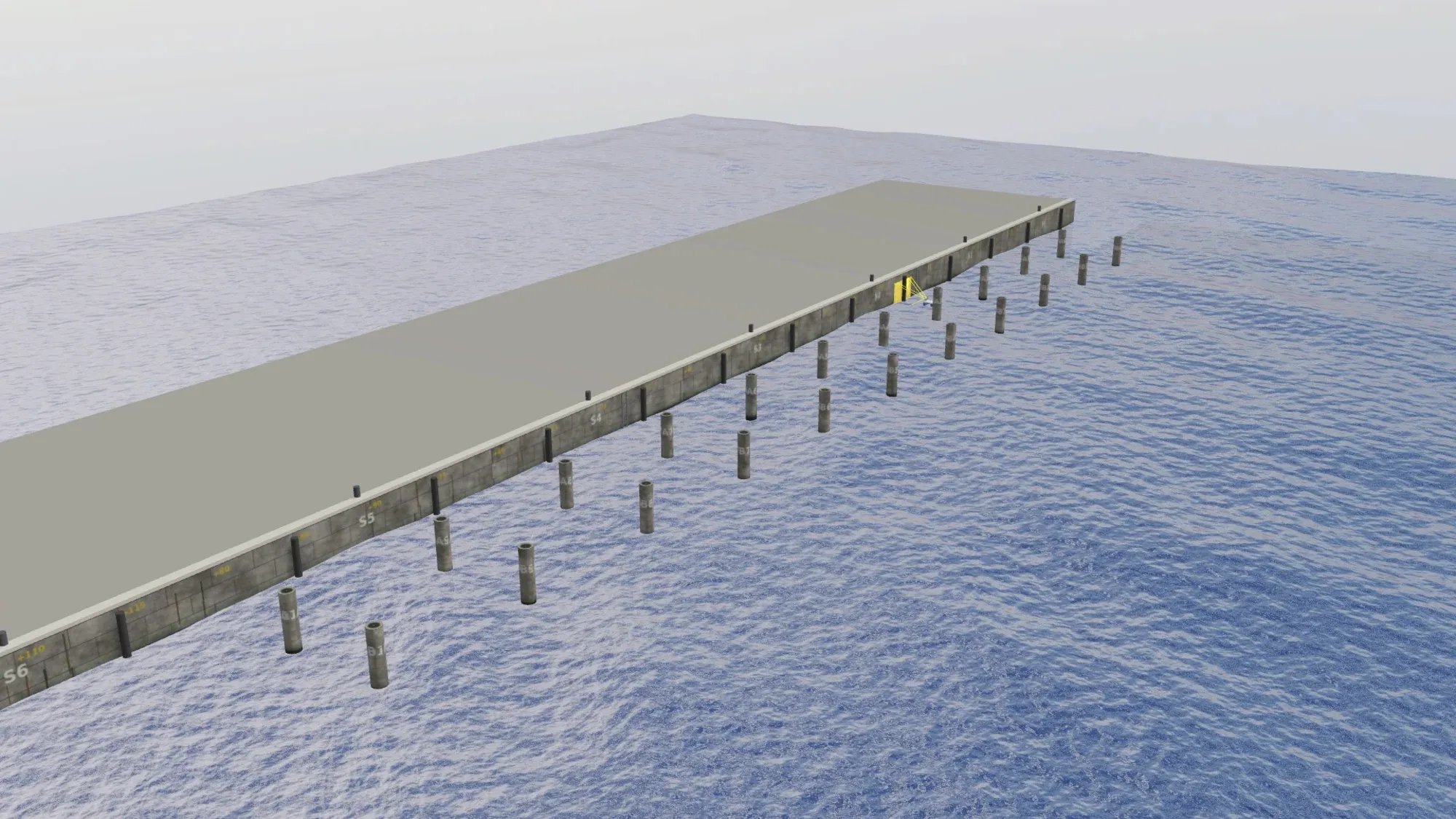
The quay survey world in Gazebo: the vessel’s lanes along the piles, the quay wall and the water it is pushed on.
The vehicle is being pushed the whole time
An aircraft that stops commanding movement hovers. A surface vessel that stops commanding movement drifts, and keeps drifting.
- Continuous disturbance. Current and wind act constantly and unevenly, so station-keeping is active work rather than a default state. A survey line that is planned straight is sailed as a crab, with the vessel pointing upstream of where it is going.
- A slow, coupled plant. A boat turns by moving forward; it cannot yaw on the spot like a multirotor, and it stops many lengths after the throttle. The steering and speed loops interact, and a tuning that works at survey speed oscillates at docking speed.
- Waves. They move the vessel and the sensor. A sonar swath from a rolling hull is a different dataset from one taken on flat water, and the processing has to know the motion.
- Assumptions that do not transfer. Return-to-home, geofences, the failsafes: all exist for a boat and all mean something different. A geofence breach on water may be the current, not the controller.
The practical consequence is that tuning is part of operations, not a one-off at commissioning. The console’s tuning page walks the steering and speed loops through the standard procedure with live graphs of target against achieved, and the tuning records land in the vessel’s log so the next operator sees what was changed.
You cannot walk up to it
This single constraint drives most of what maritime operations need from software.
- Remote diagnostics are mandatory. When physical access means a boat, the ability to see every module’s state from the console, the sonar, the GNSS, the motor controllers, the companion computer, stops being a convenience.
- One log of everything. One timeline covering every subsystem, because you will be debugging from whatever was recorded, hours later, on shore.
- Health that warns early. Catching degradation matters more when recovery is expensive and slow. A motor drawing more current than last week is a tow waiting to happen.
- Simulation that is worth something. We tune the vessel’s controllers in a physics simulator with waves and current before the real hull is in the water, and the quay-survey mission, lanes, sonar and all, is rehearsed there first.
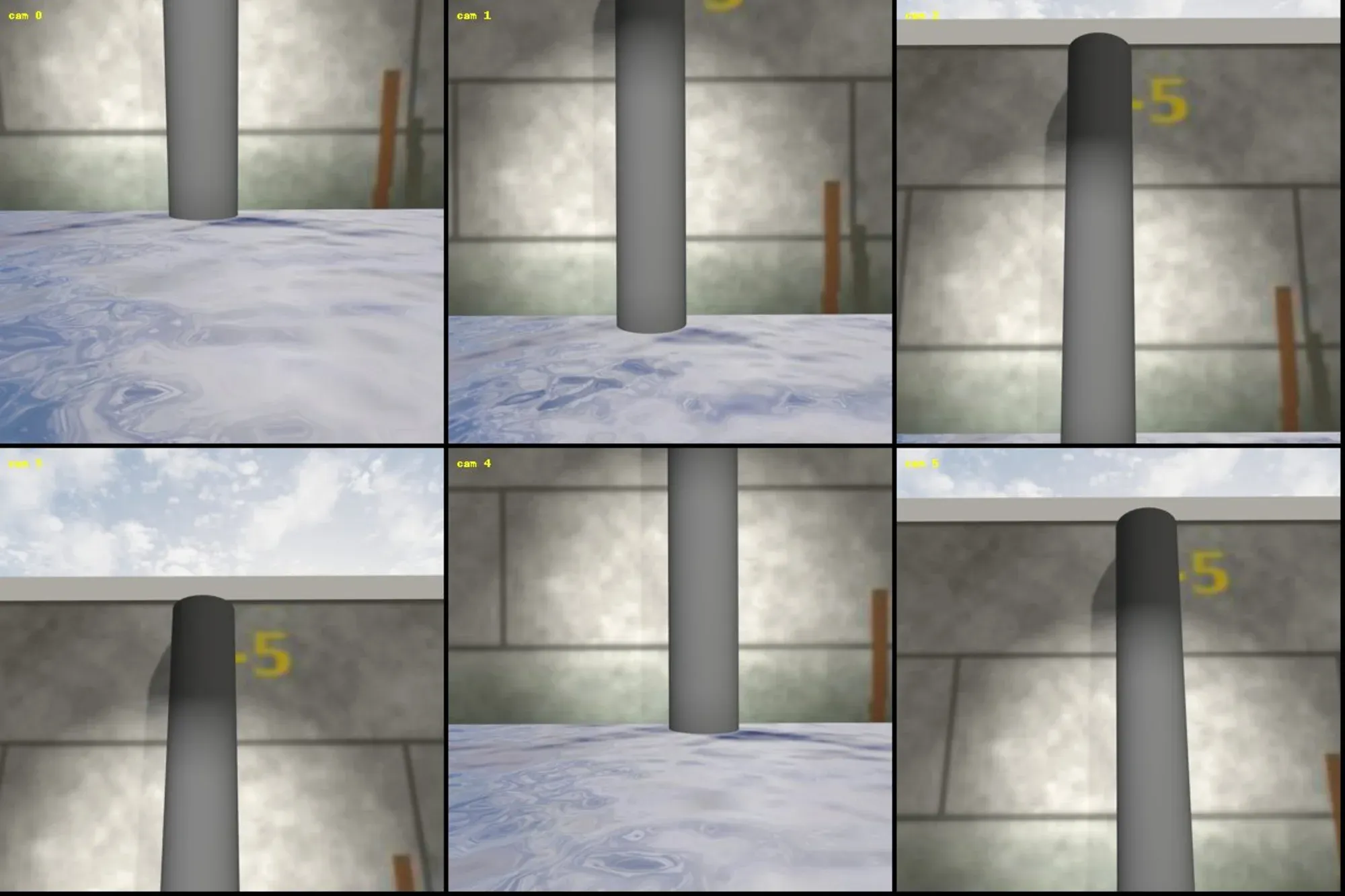
The vessel’s six mapping cameras in the Gazebo bench, one frame each.
The water works on the vehicle
- Pollutants. Contaminants in the water affect sensor readings and sensor surfaces, and the effect accumulates.
- Biofouling. Growth on hulls and sensor housings degrades both performance and measurement quality over a deployment. The hull that was fast in May is slow in August.
- Corrosion. Saltwater sets a maintenance rhythm that has no equivalent in aerial operations, and the maintenance record has to carry it.
What stays the same
The console. A vessel is a device in the same fleet list as the aircraft, flies the same survey plan with lanes along the quay instead of over it, streams its camera and its sonar swath to the same wall, and leaves its log in the same place. The operator who ran the aircraft in the morning runs the boat in the afternoon, with the controls that differ: arm and start instead of take-off, and a depth trace instead of an altitude.
Running or building surface vessels? Maritime operations combine well with aerial coverage: let us talk about both, and see the other domains in Air, Land, Water.