



· Yogesh Khedar· Industry· 3 min read
Why Drone Fleets Are the Exception, Not the Rule
Everyone talks about drone fleets — yet almost everyone operates one or two aircraft. The reasons are operational, regulatory and data-shaped.
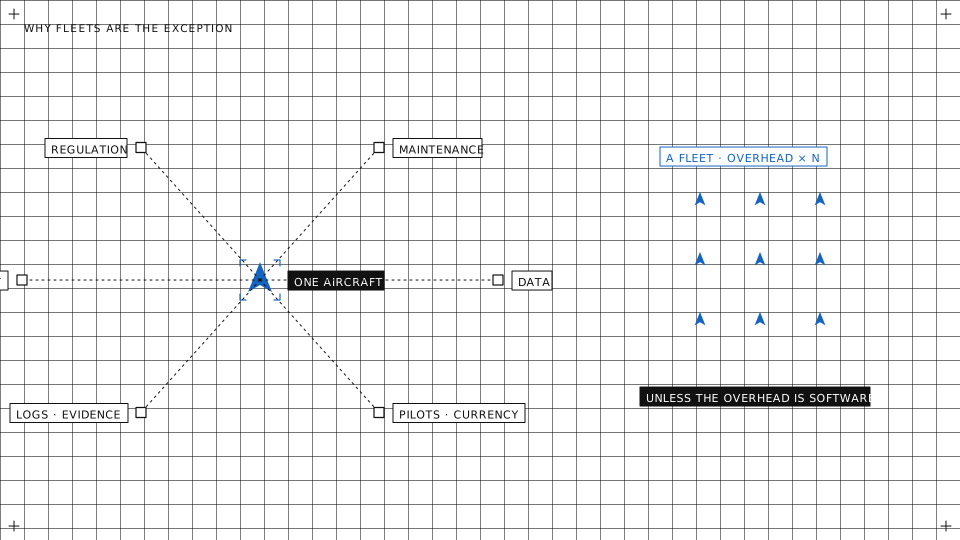
Everyone talks about drone fleets. Walk the floor at any trade show and the word is on every banner. Then ask operators how many aircraft they actually fly, and the honest answer is usually one or two. Why?
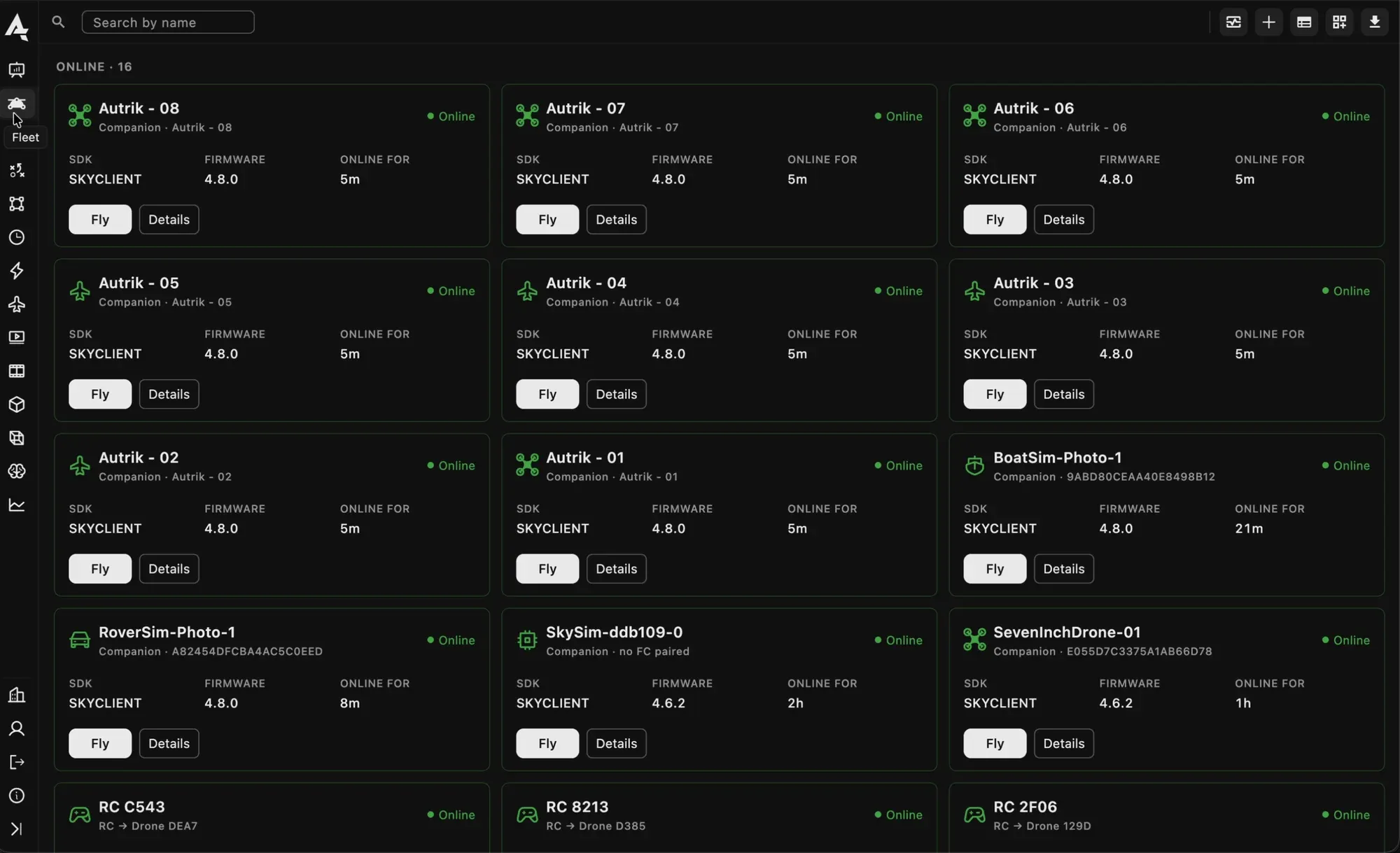
The fleet page: every device as a tile with firmware, SDK and how long it has been online.
The overhead scales badly
One aircraft is a tool. Ten aircraft are an operation: pilots to schedule, maintenance to track, logs to keep, batteries to register, firmware to update, compliance to evidence, per aircraft. Without software built for fleets, every aircraft you add adds administration faster than it adds capability, and the administration lands on the same two people who fly.
The tipping point is early. Two aircraft are a spreadsheet. Five are a spreadsheet nobody trusts. Ten are a part-time job that nobody was hired for.
Regulation is still catching up
BVLOS approvals and one-pilot-many-aircraft rules are maturing, but slowly. Much of the industry still operates under frameworks written for a person with a controller and a single aircraft in sight. The operators who fly fleets have earned the authorisation with procedures and records, and the records are the part that software has to produce: who flew, with which checklist, in which zone, with what outcome, for every flight.
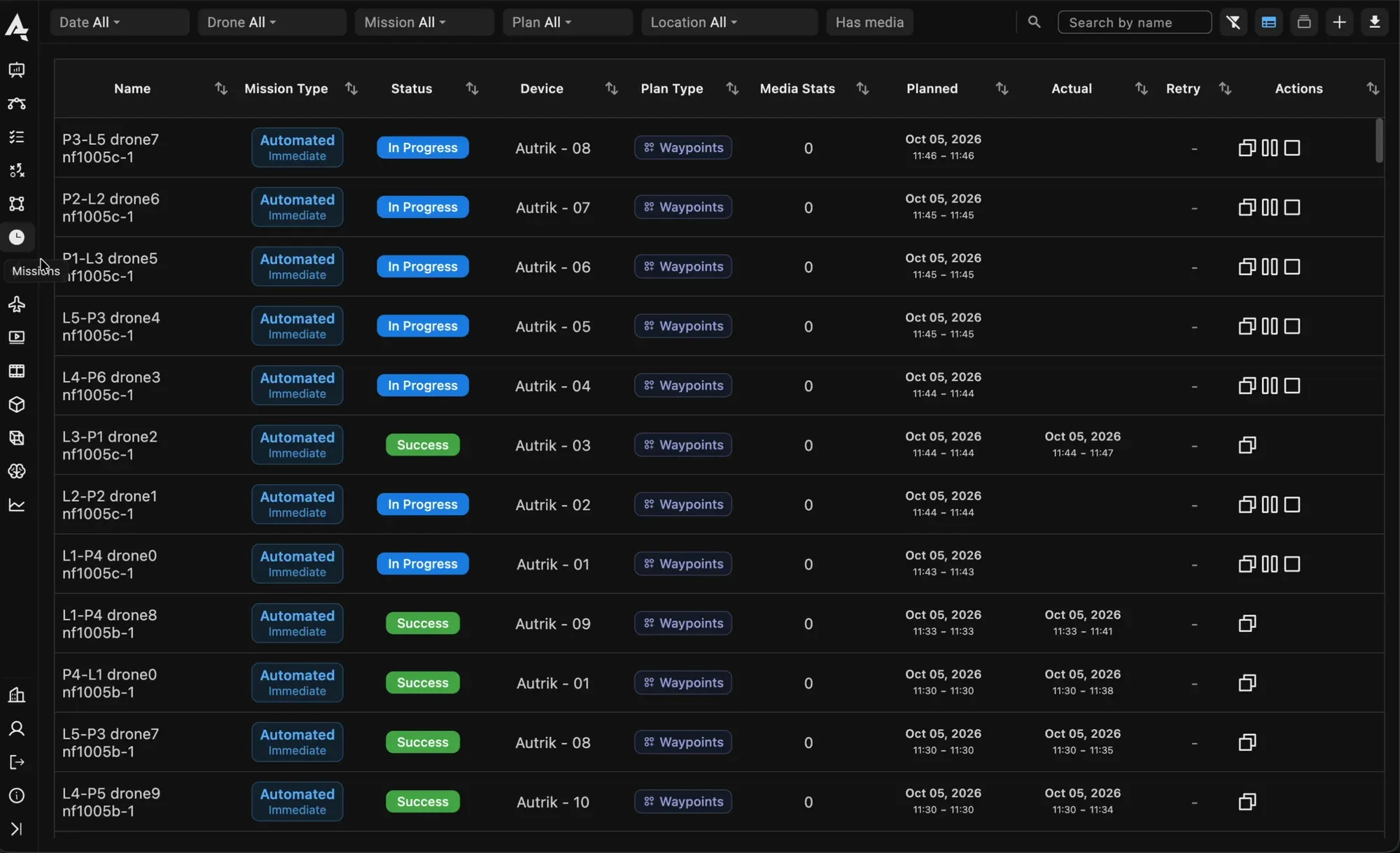
The missions table: automated missions, planned and actual times, status.
The data problem arrives before the fleet does
One drone produces manageable data. Ten produce chaos unless capture, upload, processing and review are automated end to end. A fleet that flies twenty survey flights a week produces thousands of photos, twenty logs and twenty sets of deliverables, and if any step needs a person with an SD card, that person is the bottleneck. Many teams discover this only after buying the aircraft.
Mixed fleets are the norm
Real fleets are heterogeneous: different vendors, different autopilots, different ages, a dock here and a hand-launched aircraft there, and increasingly a rover or a boat. Most software assumes one vendor. That assumption quietly caps fleet size at whatever one vendor sells, and leaves the second vendor’s aircraft in a second application with a second login.
Health is the hidden ceiling
The aircraft that is “a bit funny lately” is fine when there is one of it and the pilot knows it. In a fleet of ten, nobody knows all of them, and the degraded one flies until it fails. A fleet needs the health of every component judged by the data, every night, with a due date, not by a pilot’s memory.
What changes it
Fleet-native operations software: one list of every device whatever it is, one plan library, missions that fly from a dock on a schedule, uploads and processing that run by themselves, logs that leave the aircraft on their own, health judged per component, and compliance records that write themselves. Docks that remove the pilot-per-flight constraint. A remote operations centre that lets a small team supervise many aircraft.
That is the gap AutrikOS exists to close: the fleet page for the inventory, fleet health for the ceiling, docked fleets for the launching, and the records for the authorisation. The how of flying several at once is in multi-drone operations.
Scaling past your second aircraft? Talk to us about what fleet-native operations look like.